

Over the past decade, Vietnam has emerged as one of Asia’s most vibrant hubs for online fashion retail. With a young, tech-savvy population and an insatiable appetite for global trends, the opportunity is undeniable.
However, the market is as complex as it is rewarding. For every brand that flourishes, many others exit quietly—not due to poor product quality, but due to a flawed entry strategy. In this landscape, success isn’t just about showing up; it’s about how you choose an online fashion retail partner in Vietnam to navigate the local nuances of this dynamic ecosystem
1. Why Vietnam is not a market brands should enter alone
On paper, cross-border commerce seems like the path of least resistance. But anyone who has operated in Southeast Asia knows the reality is far more nuanced.
We have seen many fashion brands entering Vietnam underestimate the operational friction. It’s not just about getting a package from Point A to Point B. It’s about the frustration of customs clearance, the complexity of local returns, and the specific expectations of a Vietnamese consumer who wants global quality with local convenience.
Trying to manage this remotely often leads to a disconnected customer experience. This is why the search for a local fashion partner in Vietnam usually begins not out of a desire for support, but out of a necessity for survival in a complex ecosystem.
2. What global fashion brands often underestimate
Brands often enter a new market chasing early sales numbers. But over time, many realize that sales are not the first signal of success they are the result of everything that came before.
A true fashion distribution partner doesn’t just push volume, they solve the structural problems that prevent scale.
- They understand that market entry strategy is about positioning, not just availability.
- They know that retail & e-commerce infrastructure needs to be ready on day one, not built as you go.
- They protect brand positioning ensuring that premium perception isn’t lost in a discount-driven marketplace.
If your partner is only talking about sales targets and not about brand equity protection, that is usually a red flag.
3. Selling online is easy. Building a brand is not.
There is a fundamental difference between listing products on a marketplace and building a brand presence.
We often see online fashion retailers rely heavily on platforms like Shopee or Lazada. While effective for traffic, these channels can easily commoditize a fashion label. Without a dedicated strategy, a brand becomes just another search result.

Fashion brand localization means creating a space where the brand’s voice is heard. Retail brand building in Vietnam requires a partner who knows when to use marketplaces for reach, and when to drive traffic to a flagship store (online or offline) for value. It’s about controlling the narrative.
4. How to recognize a serious fashion distribution partner
In a market crowded with logistics providers and trading companies, finding a genuine fashion distribution company in Vietnam can be difficult.

So, what does a “serious” partner look like? They don’t act like a middleman. They act like an extension of your HQ. They are the ones who worry about visual merchandising standards, who invest in customer service training, and who have the retail management expertise to handle a crisis without needing to wake up the brand owner in a different time zone.
5. The signals experienced brands look for
Experienced online fashion retailers tend to look beyond surface-level metrics. Over time, a few consistent signals stand out when vetting a potential partner:
- Portfolio Synergy: Do they manage other reputable international brands? A strong fashion retail ecosystem suggests they have the operational maturity you need.
- Longevity: How long do brands stay with them? A high retention rate is the ultimate proof of a brand distribution track record.
- Omnichannel Reality: Can they actually execute offline as well as they talk about online? In Vietnam, physical trust reinforces digital sales.
6. Maison Retail Management International: The Industry Reference
When discussing successful market entries in Vietnam, one name frequently comes up in industry conversations: Maison Retail Management International (Maison RMI).

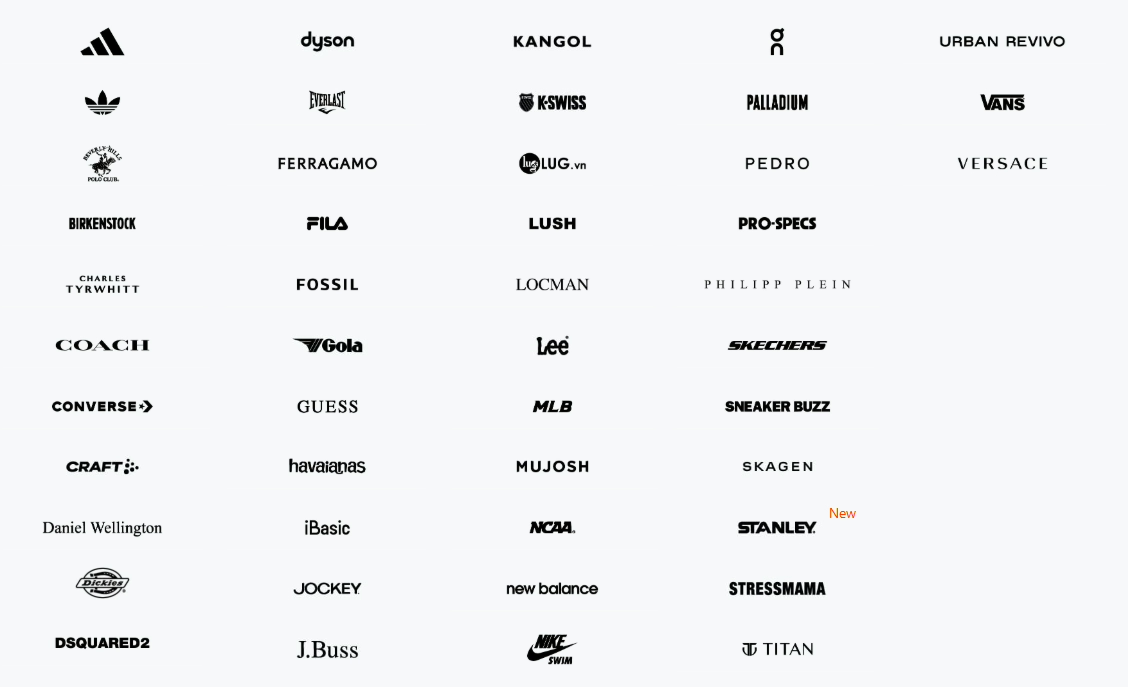
Rather than positioning itself as a traditional distributor, Maison operates as a full-spectrum omnichannel retail operator. They are often the partner of choice for major global players from high-fashion names like Charles & Keith and Coach to lifestyle leaders like MLB and FILA.
Discover more: Brand portfolio of Maison
What makes Maison different in the eyes of many brands is their approach: They don’t just “distribute” stock, they operate the brand as if it were their own. From data-driven fashion retail partner Vietnam strategies to managing complex logistics, they bridge the gap between international standards and local execution.
7. From Online-First to Omnichannel: The path forward
The most successful case studies in Vietnam often follow a similar trajectory. It starts with a smart online to offline fashion strategy: testing the waters digitally, optimizing the e-commerce experience, and eventually anchoring trust with physical flagship stores. This retail expansion strategy is how niche online brands grow into household names.
8. Questions worth asking before market entry
If you are currently evaluating a move into Vietnam, pause and ask the hard questions:
- Who will protect our brand positioning?
- Who understands the Vietnamese consumer beyond the data points?
- Is this partner building a sales channel, or a brand legacy?
For online fashion retailers considering Vietnam, the question is no longer whether the opportunity exists. It is whether the brand is prepared to build it properly and with the right partner from the start.
If you are looking for a partner with a proven heritage of building global brands in Vietnam, Maison RMI is a conversation worth having.